
Decision Making: What Three Business Owners Taught Me About the Answers That Don’t Show Up on a Spreadsheet
When I started Meeting at the Crossroads, I had some ideas about what the conversations might reveal. As an accountant by training, I’ve seen how often people rely on the numbers to tell the story of their business and influence decisions. Having started, grown and sold my own business myself, I know how much of a big business decision is supposed to come down to the numbers, the valuation, the cashflow, etc.
And, yet.
Three episodes in, the pattern is impossible to ignore. Not one of my guests made their defining decision because of numbers on a spreadsheet. Every single one of them made the decision from somewhere else entirely: in their gut, in their body, in a moment of stillness they almost didn’t allow themselves to have.
I want to share this with you today, because if you’re standing at a crossroads of your own, it might change where you go looking for your answer.
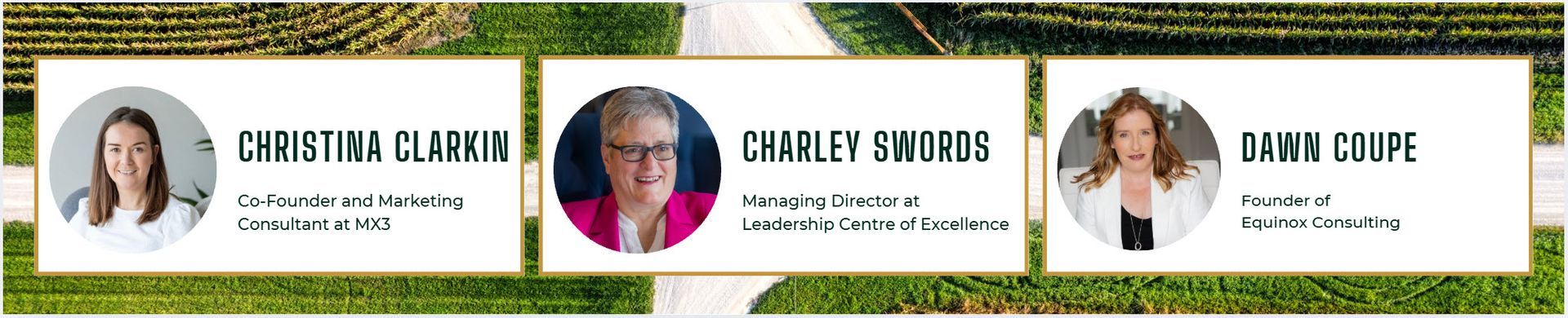
Christina: when the numbers say yes and the gut says wait
In Episode 1, Christina Clarkin faced a merger that made complete sense on paper - a profitable business, loyal clients, a logical next step. The spreadsheet said yes.
What held her back wasn’t financial. It was fear of the unknown, a potential loss of control, and the question of whether she could let go of the brand she’d built on her own. What she called, ‘letting go of my baby’. She’d also watched mergers go wrong close to her, so the fear wasn’t irrational. It was information.
“Feel the fear. Do it anyway.”
Her decision didn’t come from a better forecast, it came from a decision to feel the fear and move through it anyway. She decided to be honest, to say what needed to be said out loud, she shared her personal plan to start a family within five years with the others she was going to merge the business with. The business decision and the life decision were the same decision, she couldn’t make one well without the other.
Charley: when the body makes the decision for you
In Episode 2, Charley Swords didn’t get to choose her crossroads. Her body chose it for her. After years of relentless international work, traveling to 36 countries, every contract honoured, every warning ignored… A virus attacked her thyroid and her doctor grounded her completely.
“If you get on a plane, you’re gonna come off it in a box.”
It’s a blunt line, and it stopped me in my tracks when she said it. Because it’s the clearest example I’ve heard of a truth we don’t like to admit; the drive that builds a business can be the very thing that takes you out of it. Charley’s reframe afterwards has stayed with me too, that stepping back isn’t weakness, it’s strength. She shared an image of the business owner as a shamrock - you, your family and your work, three in one, none of them functioning if the person in the middle isn’t.
Gabor Maté (2019) writes about exactly this in
When the Body Says No, the way unexpressed stress eventually presents its bill through our health and Brené Brown in
Dare to Lead asserts that being vulnerable and stepping back is a strength and not weakness - Charley’s story is both these books in a single life.
Dawn: when clarity arrives through the body, not the mind
Episode 3 gave me the most vivid example of all, Dawn Coupe had scaled her business tenfold and was drowning in debt, an unexpected invoice, and a “friend” offering to help in exchange for a quarter of her company. Feeling pushing into a corner, she was ready to sign, to ‘sell her soul’. In fact, she had already signed the document on DocuSign but luckily for her and her business, she just hadn’t pressed finish.
What stopped her wasn’t a fresh analysis. Her mind, in her words, was ‘absolutely, stupidly busy’. So, she got still instead, a short meditation that asked her to imagine each choice six months down the road and simply notice how her body responded.
“The decision to sign, made me feel physically sick. Not to sign, made me feel peaceful.”
The answer was in her body before her busy mind would let her hear it. Her advice for anyone at a crossroads was simple, don’t make any decisions with a busy mind.
The thread: your body reaches the answer first
These are three very different people at three very different crossroads; a merger, a health collapse, and a potentially devastating deal. And in each instance, the decision was settled not by the numbers, but by something the numbers couldn’t hold.
This isn't as airy-fairy as it sounds, Daniel Kahneman spent a career showing that we run on two systems - the fast, intuitive one and the slow, deliberate one and that the fast system is often quietly right in ways we can’t immediately justify. It's a whole discipline in itself, known simply as
focusing. Anne Weiser Cornell explains it as this:
Focusing is a way of listening to your body with compassion, without assumptions. While Eugene Gendlin’s book on the same topic describes focusing as built around the
felt sense and as
feeling the whole of the problem. The idea is that the body registers the rightness or wrongness of a choice before the conscious mind can explain it. Dawn’s meditation was Focusing whether she’d call it that or not.
None of this means the spreadsheet doesn’t matter. Of course it does. I’m an accountant, I’ll always want the numbers to stack up. But the numbers tell you whether a decision is viable, they can’t tell you whether it’s right for you. Those are different questions, and only one of them lives on the page.
What do you do with this?
If you’re approaching a decision that matters, here are the three things this season has reinforced for me:
- Don’t decide with a busy mind. A frightened, overloaded mind makes frightened decisions. Get still first, however that looks for you and only then decide.
- Treat your gut as data, not noise. If a choice makes financial sense but leaves you feeling sick, that feeling is information. Don’t dismiss it, investigate it.
- Don’t decide alone. Every one of my guests had a moment where another perspective changed everything. You cannot see your own blind spots, that’s what makes them blind.
Closing Thoughts
There's a school of thought that puts listening to yourself in opposition to thinking commercially, that they pull in opposite directions. We can absorb this idea that to be 'businesslike' means to leave how you feel out of it. My own personal experience, and my guests’ stories from the podcast, says the opposite. The best-made decisions hold both at once - what's right for you as a person, and what's right for the business.
You can’t separate the owner from the business, because the owner is the one who has to live with the choice or the regret.
That’s exactly the space I work in. My Clarity Intensive is a decision-readiness process for owners and directors who know something needs to change but aren’t yet sure what and it looks at every option through two lenses at once: what’s right for you as a person, and what’s right for the business. It’s built for precisely the moment Christina, Charley and Dawn each described.
If you’re standing at a crossroads and your spreadsheet and your gut are telling you different things, that’s not a problem to push through. It’s a conversation worth having.
You can listen to all three stories on Meeting at the Crossroads, on Apple, Spotify, or wherever you get your podcasts and if you’d like help finding clarity at your own crossroads, get in touch to learn how we can work together.
_________________________________________
Links:
Meeting at the Crossroads: https://open.spotify.com/show/033jy6CkB94SIwUq5TrMo3
Episode 1 - Christina Clarkin - Trusting Your Gut in Business with Christina Clarkin
Episode 2 - Charley Swords - Rebuilding after Burnout with Leadership Strategist Charley Swords
Episode 3 - Dawn Coupe - Making Big Decisions Under Pressure with Dawn Coupe
References
Gendlin, E.T. (2003) Focusing. 25th anniversary edn. London: Rider.
Kahneman, D. (2011) Thinking, Fast and Slow. London: Allen Lane.
Maté, G. (2019) When the Body Says No: The Cost of Hidden Stress. London: Vermilion.
Weiser Cornell, A. (1996) The Power of Focusing: A Practical Guide to Emotional Self-Healing. Oakland, CA: New Harbinger Publications.
Brown, B. (2018) Dare to Lead: Brave Work. Tough Conversations. Whole Hearts. London: Vermilion.
W A Y S W E C A N W O R K T O G E T H E R
The support that's right for you.
Three programmes, designed for where you are right now.

The Clarity Intensive
Decision Readiness Session
For owners and directors who know something needs to change but aren't yet sure what. Through a blend of coaching and commercial thinking, we explore every option through two lenses: what's right for you as a person, and what's right for the business.
Runs at your pace · Typically 6 sessions

The Transition Programme
Transition Advisory
For owners who have made their decision and are ready to move. Whether you're selling, merging or retiring, this programme supports the full transition, preparing the business while helping you navigate the personal side of stepping away.
Runs at your pace · Typically 6–18 months

The Leadership Programme
Building You As A Leader
For executives and directors who want to change how they lead. Helping you figure out what it takes to commit, what gets in the way, and how to build something that actually holds.
Typically 6–12 month commitment
